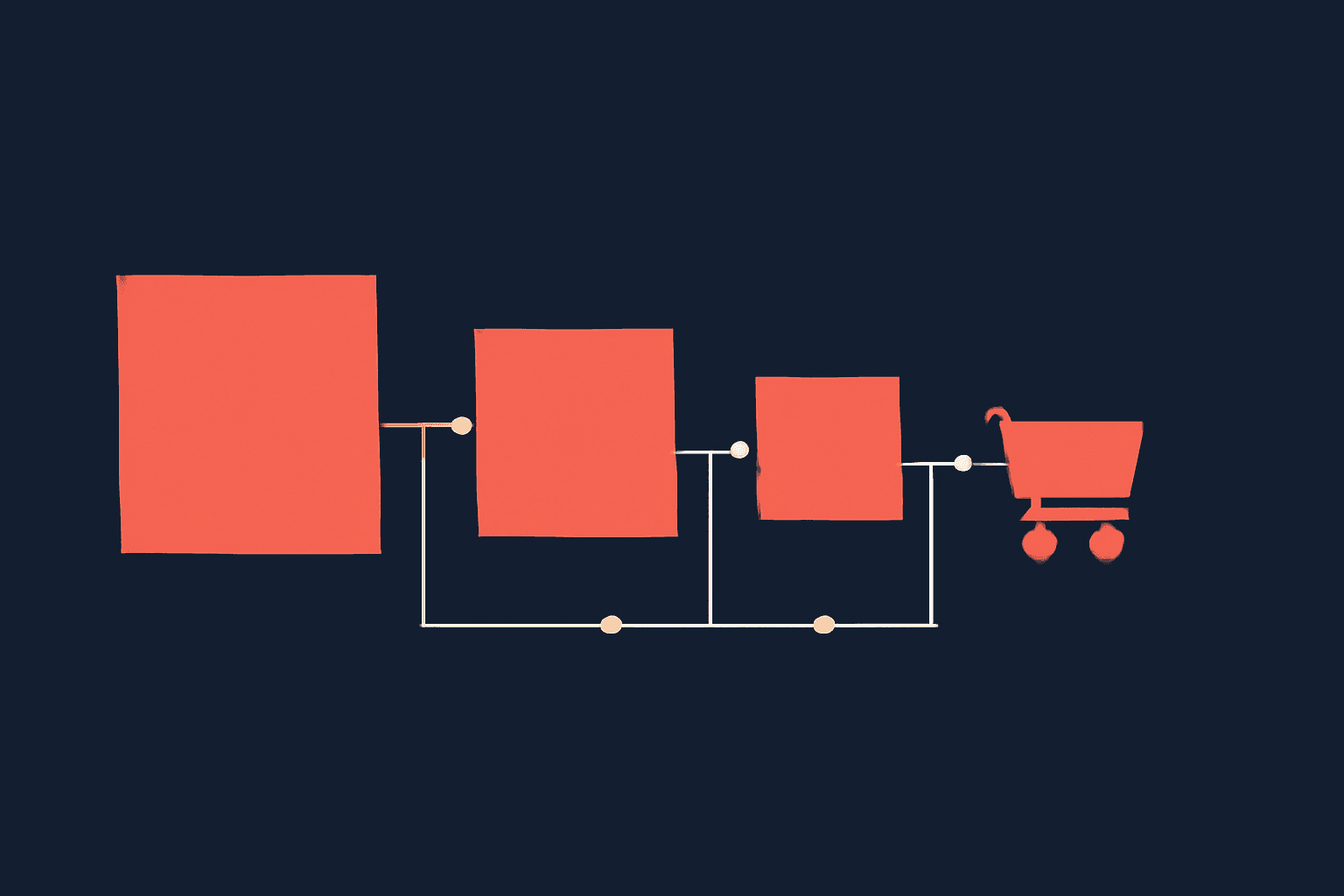
When a store underperforms, the instinct is to buy more traffic. Usually the traffic is not the problem. Somebody who has put something in a basket has already done the hard part, and the store then finds a way to lose them.
Checkout is where the money leaks, and the causes are unglamorous and fixable.
Where people leave
Common reasons a basket does not become an order
Delivery cost or timing revealed too late
the biggest single cause
Forced account creation
Their preferred payment method missing
Too many steps, or a form that fights them
Slow pages, especially on mobile data
No visible trust signals at the point of payment
Surprise delivery costs. Somebody who reaches the final screen and discovers shipping adds a third to the total does not feel like they got a price, they feel like they were caught out. Show the cost early, even approximately, and offer a threshold for free delivery if the margin allows.
Forced accounts. Guest checkout exists because the person buying one item does not want a relationship with your store yet. Ask afterwards.
Payment methods. This one is specifically local. A South African store offering only card is leaving money on the table. Instant EFT is genuinely mainstream here, and a meaningful share of shoppers will simply not complete a card payment. Which methods you support is a commercial decision with a direct conversion consequence.
Mobile is the actual store
Most South African shoppers are on a phone, often on mobile data, often on a mid-range Android device. That means the store you should be judging is the one that renders on a modest phone with a throttled connection, not the one on your desktop over office fibre.
Two ways to test your own checkout
How it usually gets tested
- On the owner's laptop.
- Over fast office internet.
- With a saved card and a filled-in address.
- By somebody who built it and knows the flow.
- Once, before launch.
How it should be tested
- On a mid-range Android phone.
- On mobile data, with throttling on.
- As a brand new customer, from a cold start.
- By somebody who has never seen it.
- Every time anything in the funnel changes.
Do the second version once and you will usually find the problem inside five minutes, without needing any analytics at all.
Fix in this order
Working through a leaking funnel
- 1
Measure
Find the step where people actually leave. Fixing the wrong screen is the most common wasted effort.
- 2
Remove
Take out fields, steps and interruptions before adding anything. Almost every checkout is carrying dead weight.
- 3
Reassure
Delivery cost, return terms and payment security, visible at the moment of doubt rather than on a policy page.
- 4
Then optimise
Speed, upsells and personalisation matter, but they are worth little while the basics leak.
What to have ready
Before an audit
- Analytics with the funnel steps actually tracked, or an honest admission that they are not.
- Your current payment methods, and which ones customers ask for.
- Delivery pricing rules, including the exceptions nobody documented.
- Whether guest checkout exists today.
- Your real mobile share, from data rather than assumption.
- The last three changes made to the checkout, and when.
If your store gets traffic and not enough orders, tell our concierge what the numbers look like. It scopes the work with you and passes a proper brief to the team.